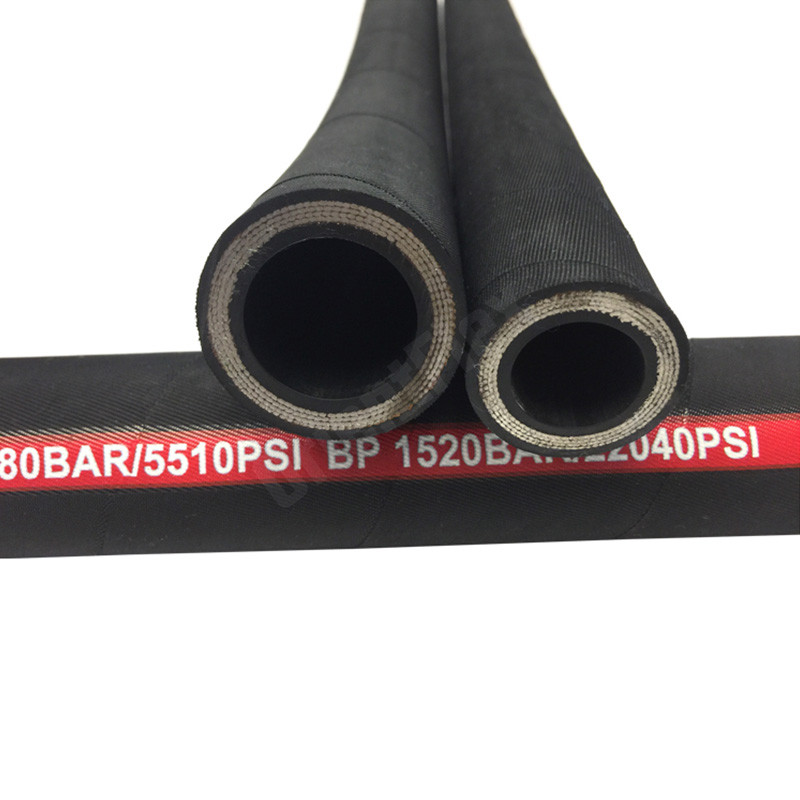
Featured Hoses for Automated Control Systems
Engineered to meet the exact demands of pneumatic routing, thermal regulation, and high-frequency movement in automated factory environments.
The Critical Role of Water and Air Hoses in Modern Automated Assembly Lines
In the era of Industry 4.0, automated assembly lines rely on a complex web of pneumatic control lines, sensors, and actuators to execute rapid, high-precision tasks. While the primary medium for signaling and mechanical actuation is compressed air, the integration of high-performance water hoses within these systems is crucial. These hoses manage thermal regulation, prevent equipment overheating, and support auxiliary fluid systems that operate alongside pneumatic controls.
Why Hybrid Pneumatic-Fluid Routing Matters
Automated machinery, such as robotic welding arms, high-speed pick-and-place systems, and molding machinery, generates significant heat. Integrating specialized water hoses parallel to pneumatic control lines ensures that critical components maintain optimal operating temperatures. This prevent thermal expansion, which can otherwise compromise the micron-level precision required in modern manufacturing processes.
Furthermore, the selection of hose materials is no longer a simple engineering detail; it is a critical factor in system uptime. Hoses must endure millions of bending cycles, resist chemical exposure from lubricants and mist, and maintain structural integrity under fluctuating pressures. Failing to select the appropriate hose can result in costly unscheduled downtime, air pressure drops, or fluid leaks that damage sensitive electronic sensors.
Industrial Landscape & Market Trends
1. The Rise of High-Frequency Robotic Actuation
As robotic arms become faster and more compact, the routing space for pneumatic and coolant lines has shrunk. This has driven demand for highly flexible, kink-resistant hoses with tight bend radii. Thermoplastic and silicone hoses are increasingly preferred over traditional heavy rubber because of their lighter weight and superior dynamic fatigue resistance.
2. Smart Monitoring and Predictive Maintenance
The industrial market is moving toward smart factories where every component is monitored. Modern hose assemblies are being designed to work alongside flow and temperature sensors. These sensors detect micro-leaks or pressure anomalies in pneumatic control lines before they cause catastrophic failures, allowing maintenance teams to schedule replacements during planned downtime.
3. Sustainability and Chemical Resistance
Environmental regulations are pushing manufacturers to eliminate hazardous plasticizers and chemicals from hose production. At the same time, automated lines use increasingly complex synthetic lubricants. Modern hoses must offer broad chemical compatibility to prevent degradation, ensuring that the water or air passing through remains free of contaminants.
Key Technical Requirements:
- High abrasion resistance for dynamic dragging tracks.
- Ozone and UV resistance for long-term indoor and outdoor service.
- Flame-retardant properties near robotic welding systems.
- Minimal volumetric expansion under pressure.
Deep Application Scenarios in Automated Manufacturing
Examining how high-performance hoses perform in specific, high-stress production environments.
Automotive Welding Cells
In robotic spot-welding stations, pneumatic lines actuate the welding guns while water hoses circulate coolant to the electrodes. The hoses must withstand weld spatter, high heat, and continuous twisting movements without losing flexibility or pressure.
Semiconductor Assembly
Cleanroom environments require ultra-pure, non-outgassing hoses. Pneumatic control lines here must operate without releasing particulate matter, requiring specialized thermoplastic and silicone hoses that meet strict cleanliness standards.
Packaging & Sorting
High-speed pick-and-place lines use vacuum-resistant hoses and pneumatic lines to move products at speeds exceeding 100 cycles per minute. Lightweight hoses prevent inertia buildup, reducing wear on the servo motors.
Hebei Orient ADMA Tech Group Co., Ltd.
Who We Are
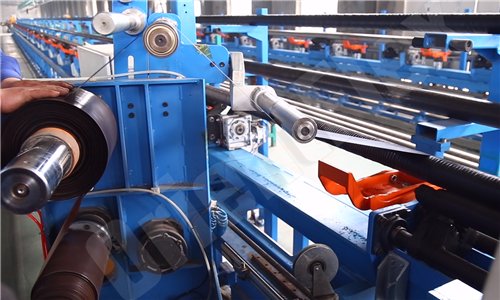
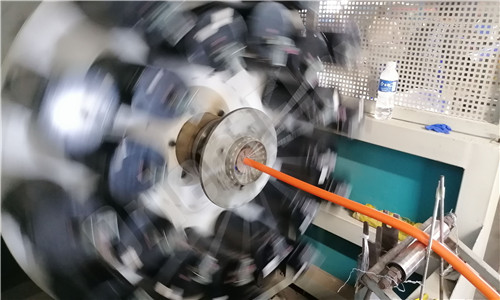
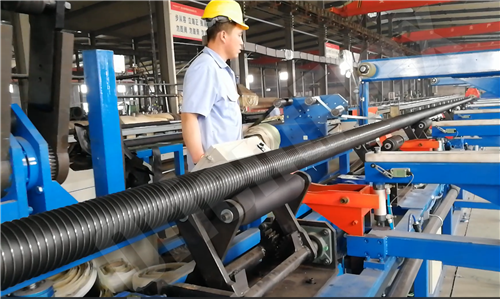
Hebei Orient Rubber & Plastic Co., Ltd. was set up in 2010. We are a manufacturer integrating produce and export hoses and fittings. For our product, we have 5 series and more than 150 types. The 5 series include industrial hose, thermoplastic hose, hydraulic hose, silicone hose and auto hose. After 13 years' high speed development, we become a group company in 2023.
Development History
At the beginning of our establishment in 2010, we have just 10 members. But after 14 year’s develop, we have over 180 people now. Meanwhile, we constantly expand the scale our factory. Besides, we constantly improve our technology and update advanced equipment. As a result, our production efficiency has been greatly improved. While our products become better and better. And now, our supply capacity reaches 100 containers per month.


Our Strengths & Global Advantages
Why leading automation and industrial enterprises worldwide trust Hebei Orient.
Over a decade of experience in foreign trading, exporting high-quality hoses to global markets with seamless logistics.
We have earned a strong reputation for reliability and quality from clients across Europe, the Americas, and Asia.
From custom hose design and material formulation to final assembly and fitting matching, we provide a complete solution.
We offer multiple, convenient, and flexible payment terms to facilitate smooth international transactions.
Strict quality control protocols govern every stage of production, ensuring defect-free hoses for critical applications.
Dedicated sales, engineering, and after-sales support teams are available to assist you with technical inquiries.
Our operations and products are fully certified under ISO 9001, ISO 14001, CE, FDA, Reach, and other standards.
Strong financial standing and scale ensure consistent operations and supply chain security even in volatile markets.
We maintain deep relationships with key distributors and engineering firms globally, ensuring localized market insights.
Selecting the Right Hose Material for Automation
Different automated assembly line environments require specific material properties to prevent failure.
Polyurethane (PU) vs. Thermoplastic vs. EPDM Rubber
For standard pneumatic control lines, Polyurethane (PU) is widely used due to its flexibility and resistance to kinking. However, when high pressures or elevated temperatures are involved, thermoplastic hydraulic hoses (such as SAE 100 R8) offer superior tensile strength and structural stability. These hoses utilize synthetic fiber reinforcement to handle high pressures without expanding, ensuring that pneumatic signals remain sharp and responsive.
When the application involves water cooling or suction (e.g., cooling lines for automated molding or welding), EPDM rubber or silicone hoses are preferred. EPDM provides excellent resistance to heat, ozone, and weathering, making it ideal for cooling lines. Silicone heater hoses (SAE J20 R3) offer even higher thermal resistance, allowing them to route hot fluids near high-temperature manufacturing machinery without degrading.
Preventing Electrostatic Discharge (ESD) in Pneumatic Lines
In electronics assembly, the friction of air moving through plastic hoses can generate static electricity. If this charge discharges near sensitive semiconductor components, it can ruin the product. Specialized anti-static pneumatic hoses are designed with conductive materials to safely ground static charges, protecting both the product and the automated machinery.
Complete Product Catalog for Automated Control Lines
Explore our full range of industrial, hydraulic, silicone, and specialized hoses engineered for reliable automated assembly operations.
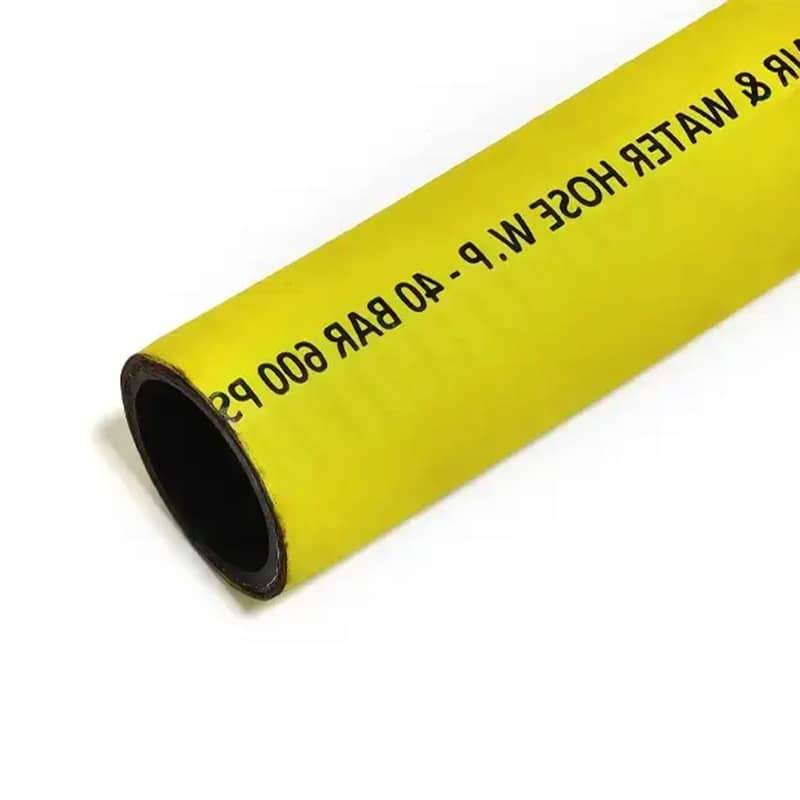
Wire Reinforced Air Hose for High-Pressure Pneumatics
Learn More →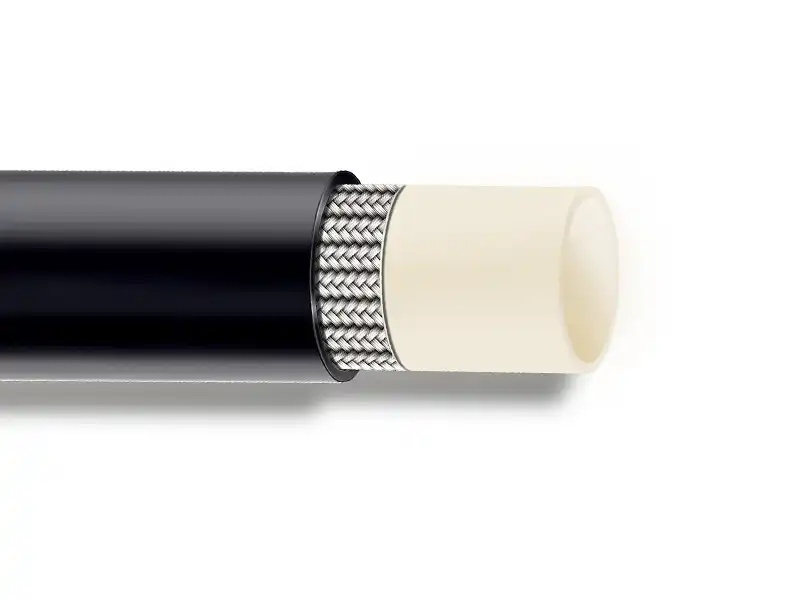
SAE 100 R8 Thermoplastic Hose for Robotic Control Lines
Learn More →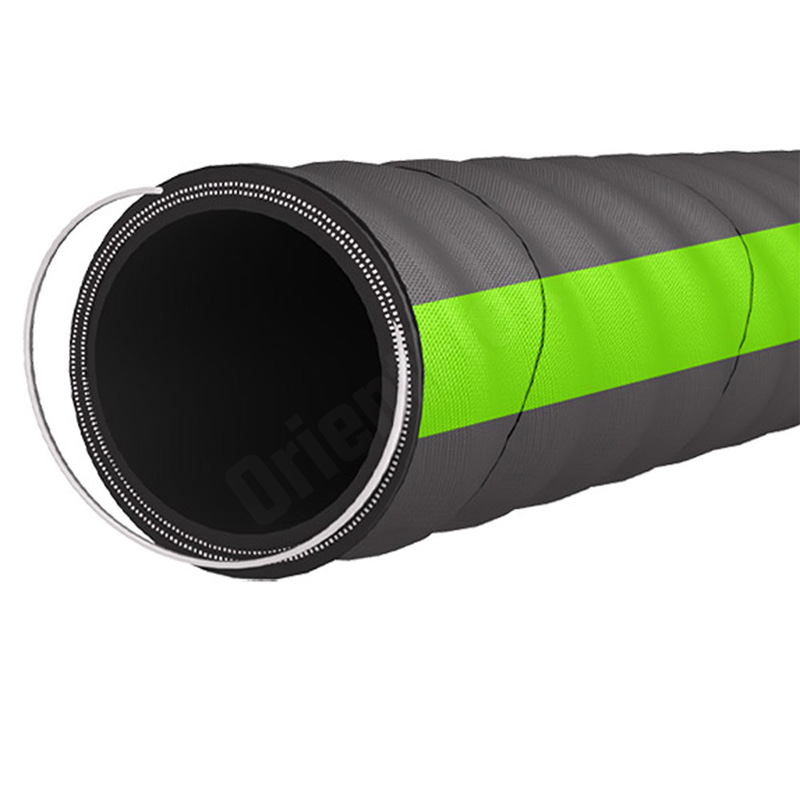
Vacuum-Resistant Rubber Water Suction & Discharge Hose
Learn More →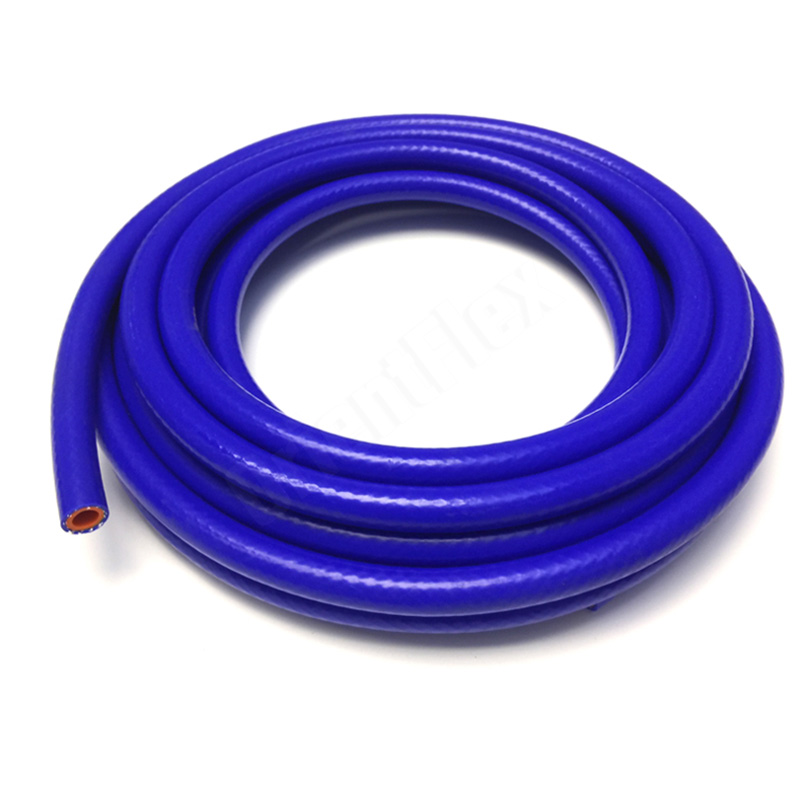
Silicone Coolant Hose SAE J20 R3 for Thermal Assembly Lines
Learn More →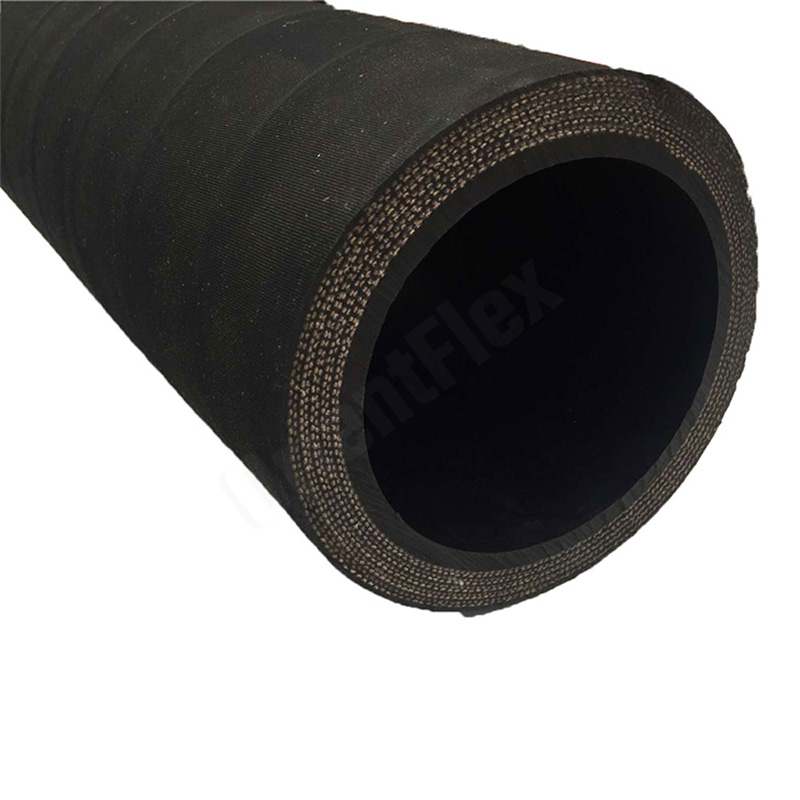
Heavy-Duty Slurry Hose for Abrasive Handling & Automation
Learn More →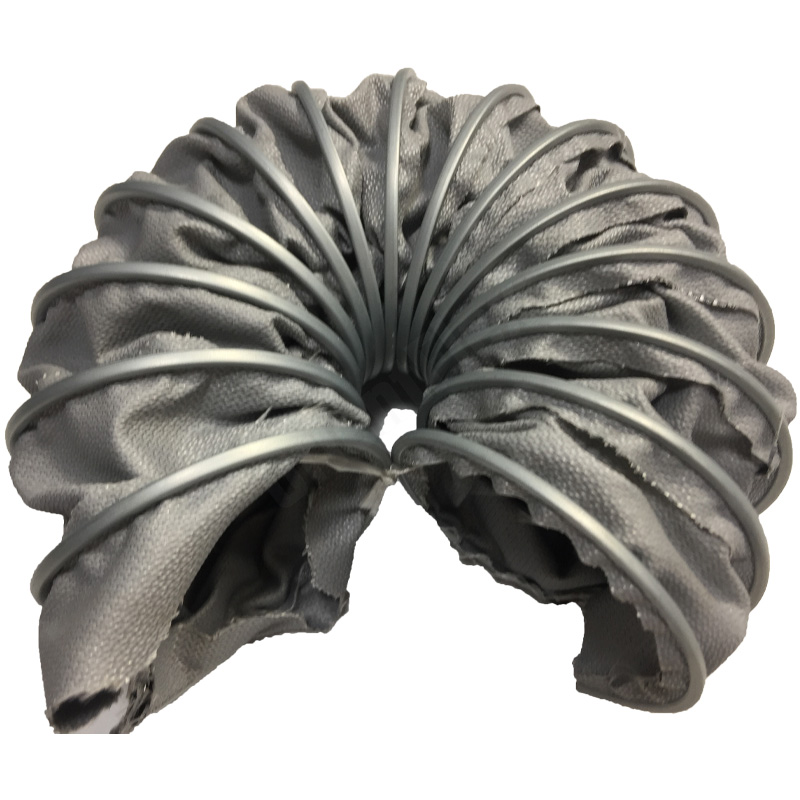
High-Temperature Resistant Hot Air & Gas Ducting
Learn More →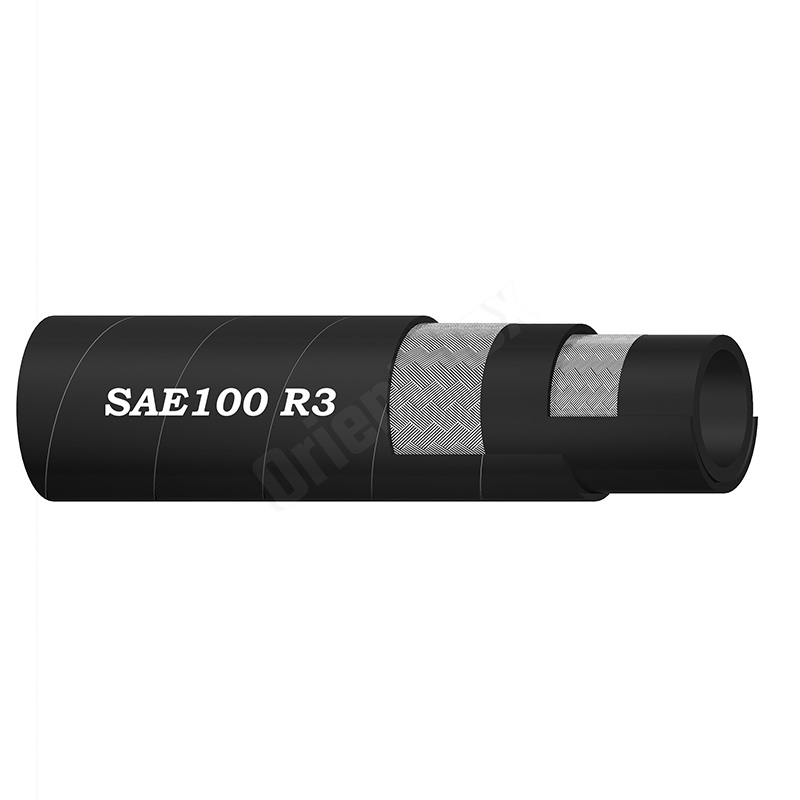
SAE 100 R3 Textile Reinforced Control Hose
Learn More →